

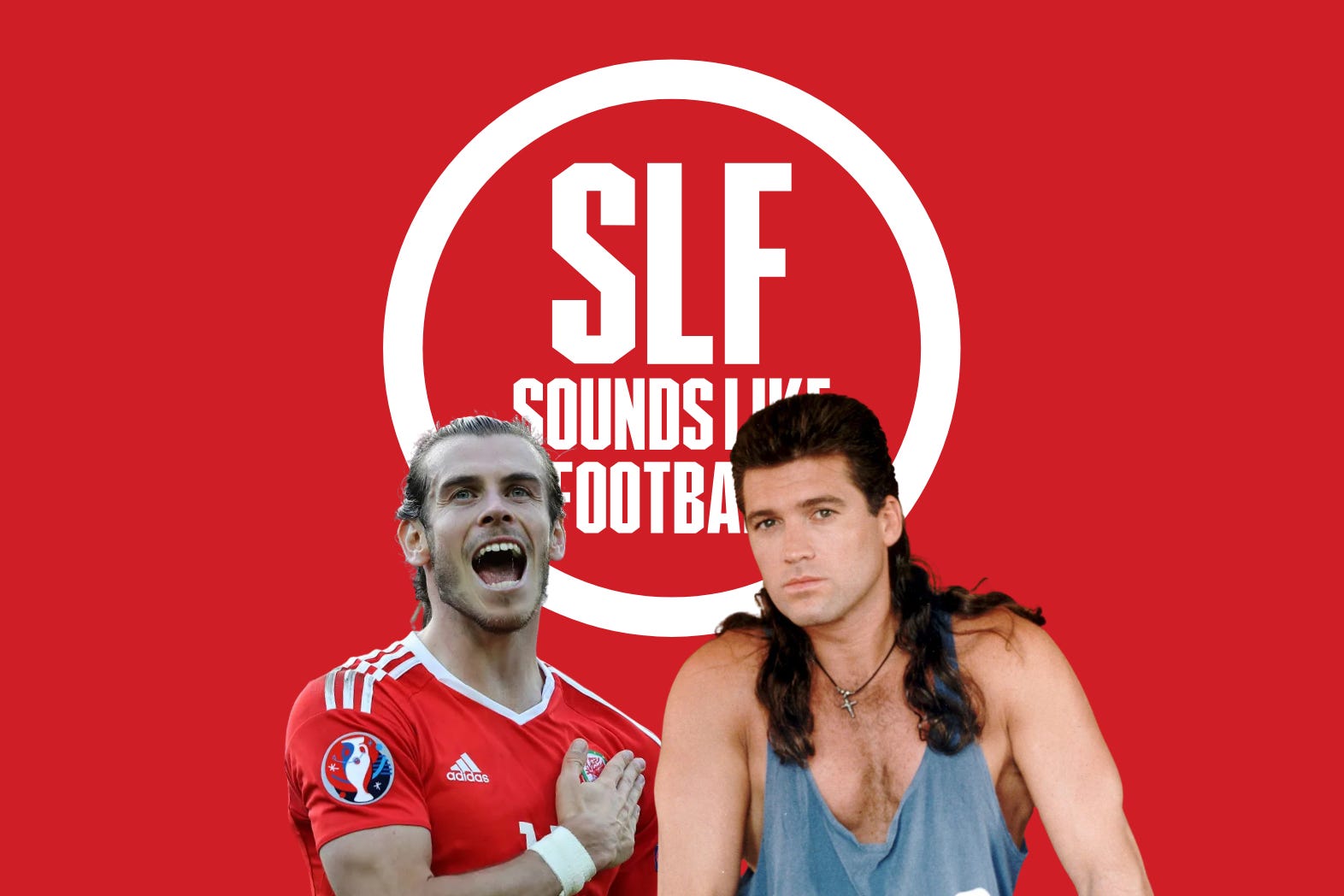
I’m driving in 2026 when it hits me. Billy Ray Cyrus and his achy, breaky heart on the radio – almost a quarter of a century since the song’s release and a full decade after Wales reached the semi-finals of the European Championships against the odds. The lyrics appearing in my mind’s rear-view mirror, making me glance back through my decades of both football and music fandom.
But don’t tell my heart, my achy breaky heart. I just don’t think he’d understand.
Wait, that’s the Payet song. The sound of West Ham fans chanting rises like bubbles, the memory of them singing the name of a terrace hero (before he put in a transfer request and turned villain, returned to Marseille).
We’ve got Payet, Dimitri Payet. I just don’t think you understand. He’s Super Slav’s man. He’s better than Zidane. We’ve got Dimitri Payet.
I’m not sure if Payet is the first player to have their cognomen put to this 1992 crossover country-pop hit – a song that made Billy Ray a household name long before he became better known as Miley’s dad. Wikipedia lists a whole XI of other players in the article’s ‘Usage in sports’ section. Dele Alli. John McGinn. Mesut Özil. Malky Mackay. Of the Wiki list, Park Ji-sung at Man Utd certainly appears to pre-date Payet – the Korean’s career at Old Trafford ending three years before the Frenchman held a claret-and-blue scarf aloft on his Boleyn Ground signing day. But it’s Payet that comes to mind first when I hear these lyrics on the drive home and make that (now obvious) connection.
I’ve always mixed up Achy Breaky Heart with Cotton Eye Joe, the two songs not sounding much alike but both part of a brief moment in the sun for country-and-western music on the grey island of Great Britain. It was a moment that coincided with the opening of Ellie May’s at the foot of my Lower Swansea Valley hometown, the self-styled ‘chicken shack’ bringing a slice of the Southern US to the banks of the River Tawe. The music video for Achy Breaky Heart is credited with bringing line dancing into the mainstream, and kids from my primary school would attend midweek lessons at Ellie May’s, learning step sequences to the sounds of Billy Ray, Dolly Parton and Kenny Loggins – their usual Adidas poppers swapped out for Levi’s jeans.
Leaving thoughts of the 1990s behind, back in 2026 my car radio plays the chorus again, and the penny finally drops. This is the song that the Red Wall used to soundtrack that unlikely Welsh run at Euro 2016. A run that – had we not come up against a Ronaldo-inspired Portugal in the semis – might have seen us face Payet’s France in the final.
Don’t take me home. Please don’t take me home. I just don’t wanna go to work. I wanna stay here and drink all your beer. Please don’t, please don’t take me home.
I’m pretty sure that we robbed this chant from England (but they robbed Owen Hargreaves from us, so let’s call it a draw). The Red Wall’s version of the chant became so synonymous with the first Welsh appearance at a major tournament in 58 years that it lent its name to much of the post-2016 celebratory media, including Johnny Owen’s documentary on the journey from Gary Speed’s death in 2011 to the European semi-finals five years later.
A terrace chant can be so removed in context from the original song that your mind just doesn’t make the connection. Lyrics are changed, melodies butchered. It means that they often exist separately – one version only ever heard through a single voice professionally recorded, the other belted out by thousands of voices aiming for synchronicity not harmony. Before we kicked off this project, Darren shared this playlist with me, and I found myself sending him countless messages to ask what terrace chants these original songs corresponded to (without him to call upon I never would have, for example, made the connection between Rotterdam and ‘Cardiff get battered everywhere they go’ – the beautiful south indeed).
There’s a case to be made for Don’t Take Me Home being the Welsh football team’s most famous song (though Andy Williams, Dafydd Iwan and Kernkraft 400 might have something to say about that). Achy Breaky Heart is certainly the song I first think of when I hear the name Billy Ray Cyrus. His biggest solo hit, it was the first country single to be certified platinum since Kenny Rogers and Dolly Parton’s Islands in the Stream in 1983. It reached No. 4 on the Billboard Top 100, No. 3 on the UK Singles Chart, and No. 2 on VH1’s ‘50 Most Awesomely Bad Songs Ever’. Despite being Billy Ray’s signature song, just like Don’t Take Me Home it was sung by someone else before him – released a year previously by The Marcy Brothers as Don’t Tell My Heart, an album track on their third (and final) offering.
At the bottom of my hometown, Ellie May’s Chicken Shack has disappeared, the early-90s mainstream love of country music it represented long returned to minority pursuit. If you listen to a country radio station in 2026, you know with each song that plays there’s a good chance you’re listening to someone with a red cap either proudly displayed on their head or hidden away in their cupboard. Despite previously claiming to be a lifelong Democrat, in 2025 Billy Ray Cyrus performed at the presidential inaugural ball, celebrating the commencement of Donald Trump’s second term. If our civilisation survives the trigger-happy thumb of Trumpism, it’ll be interesting to see if this link between Achy Breaky Heart and the USA’s dictator-in-waiting colours the view of Welsh fans singing Don’t Take Me Home in the decades that follow. Perhaps it’s best that terrace chants often exist separately from their origins after all. That football fans take these songs and make them their own.
Rhys Owain Williams is the co-editor of Sounds Like Football. His writing has appeared in magazines including Gutter, Magma, The Aftershock Review and Poetry Wales – who recently named him as a ‘poet to watch’. Rhys is the author of the poetry collections That Lone Ship (Parthian, 2018) and Here’s What Happens When You Enter a Black Hole (Parthian, 2026). He supports Swansea City and Wales.
Sounds Like Football aims to explore the songs behind the chants in football the world over, one song at a time. Interested in writing an entry? See our About section for more info. A project by Darren Chetty and Rhys Owain Williams.
Credits
Videos: BillyRayCyrusVEVO, Wrexhammental